All Hazards Consortium
  • Home
    • AHC Leadership
    • Vision / Mission
    • Who Is The AHC?
    • AHC Capabilities
    • What Does AHC Do?
    • Working Groups Overiew >
      • Fleet Response Working Group
    • AHC Facilitation Capabilities
    • Use Case Process / Results
    • Partnerships
  • Emergency Response
  • Reports
  • Initiatives
    • Public/Private Innovation
    • ReadyOps Service
    • Cyber
    • Mitigation Initiative
    • SISE-net Information Hub
    • STORM School
    • SISE
    • SISEnet
    • Cross-Sector Exercises
    • ORL Data Standard
    • Energy Storage Initiative
    • ENDEAVOR Model >
      • ENDEAVOR EO Alignment
  • Join Us
    • Membership
    • Sponsorship

What has the AHC accomplished?

Real world, operational impacts are felt by both public and private sectors as part of the efforts of the AHC and it working groups.  

  • Creation and sustainment of  the Integrated Planning and Governance Framework for ongoing joint planning and exercises Relationships and trust developed between operations professionals in the public and private sectors, which lead to joint working group charter development and the ongoing operational benefits of planning
  • Trained 100+ public and private sector organizations in the mid-Atlantic region on how to shelter in place during certain types of disasters.
  • Organized and sustained multiple states in support of the FirstNet initiative via operating regional working group called MACINAC. 
  • Reduced delays for utility vehicles at US/Canadian border from two hours to 20 seconds per truck.
  • Reduced toll station delays for utility vehicles in Northeast via an expedited toll station process
  • Improved efficiency and functionality of private sector liaison in state Emergency Operation Centers (EOCs) via an Electric Utility Liaison Position Specific Guide to help private sector liaisons function in state EOCs.
  • Expedited power restoration by implementing a national fleet movement process that coordinates with states across broad geographic footprints (10+ states).
  • Launched secure information sharing pilot and portal that will provide private sector their own trusted platform to share sensitive operational information with specific state and local government individuals.
  • Produced operational tools website that allows open access at no cost to a number of functional, operational products that can be used by any sector across United States.
  • Produced a variety of educational webinars and training products to help public and private sector understand both sides of an operational issue.
  • Attracted FEMA, United States Department of Transportation (USDOT), and United States Department of Education (USDOE) support to develop educational and operational support for the ongoing regional fleet movement process with states/cities. Attracted $500,000 in DHS Science & Technology support for a secure information sharing platform and the development of a Trust Framework Agreement to share sensitive operational information
  • Developed annual CATEX information sharing exercise/drills to expedite regional situational awareness and decision making
  • Hosting “Resilience in America”, a national radio talk show on WTOP/Federal News Radio focused on government and private sector resilience efforts and initiatives
Picture
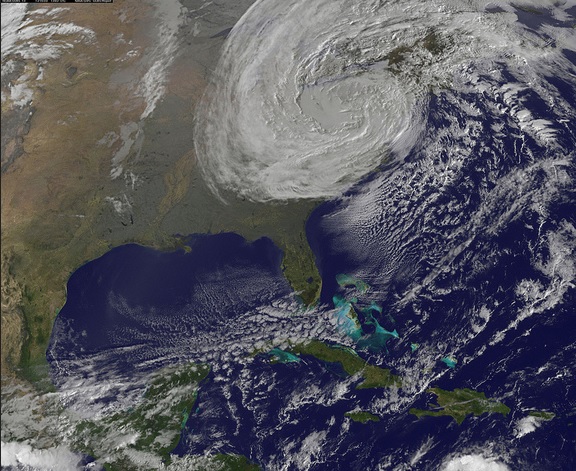
Hurricane SANDY Case Study
During Hurricane SANDY in 2012, the AHC and its private sector working group stakeholders


  • Locating Citizen and Worker Housing - identified potentially thousands of housing units to support workers and citizens

  • Citizen/Worker Protection - provided social media service that saved lives, rescued stranded citizens, and protected property and critical infrastructure

  • Regional Rail Security - regional rail alerts were provided which kept states and industry informed of rail related incidents and operating status

  • Power/Utility Fleet Movement - expedited power & utility fleet movement through toll stations

  • Daily Resource Availability Reports - provided real time data that helped locate thousands of open and/or closed fuel, food, pharmacy, and hotel locations. According to FEMA, this information was used to brief the White House daily and was the central planning data used during the first 2-3 days of SANDY.
2026 All Hazards Consortium. All Rights Reserved. Privacy Statement
  • Home
    • AHC Leadership
    • Vision / Mission
    • Who Is The AHC?
    • AHC Capabilities
    • What Does AHC Do?
    • Working Groups Overiew >
      • Fleet Response Working Group
    • AHC Facilitation Capabilities
    • Use Case Process / Results
    • Partnerships
  • Emergency Response
  • Reports
  • Initiatives
    • Public/Private Innovation
    • ReadyOps Service
    • Cyber
    • Mitigation Initiative
    • SISE-net Information Hub
    • STORM School
    • SISE
    • SISEnet
    • Cross-Sector Exercises
    • ORL Data Standard
    • Energy Storage Initiative
    • ENDEAVOR Model >
      • ENDEAVOR EO Alignment
  • Join Us
    • Membership
    • Sponsorship